 The Good Sign Company
Worth-it decision
Is a tabletop flip-chart sign worth it for daily messages?
A tabletop flip-chart sign is worth it when a small, stable set of messages repeats in a predictable sequence and a staff member can deliberately turn to the right page. Skip it when one message must be visible immediately, the content changes unpredictably, or visitors would have to flip pages to find a basic instruction. Delay the purchase until you list the real pages, measure the counter, and test the sequence with a paper mockup.
This format is closer to a compact message library than a general counter sign. The value comes from keeping recurring pages together—not from adding as many pages as possible. If several unrelated messages need to be browsed from different sides, compare the decision with a rotating tabletop sign holder. For the wider counter plan, start with the small-business sign planning guide.
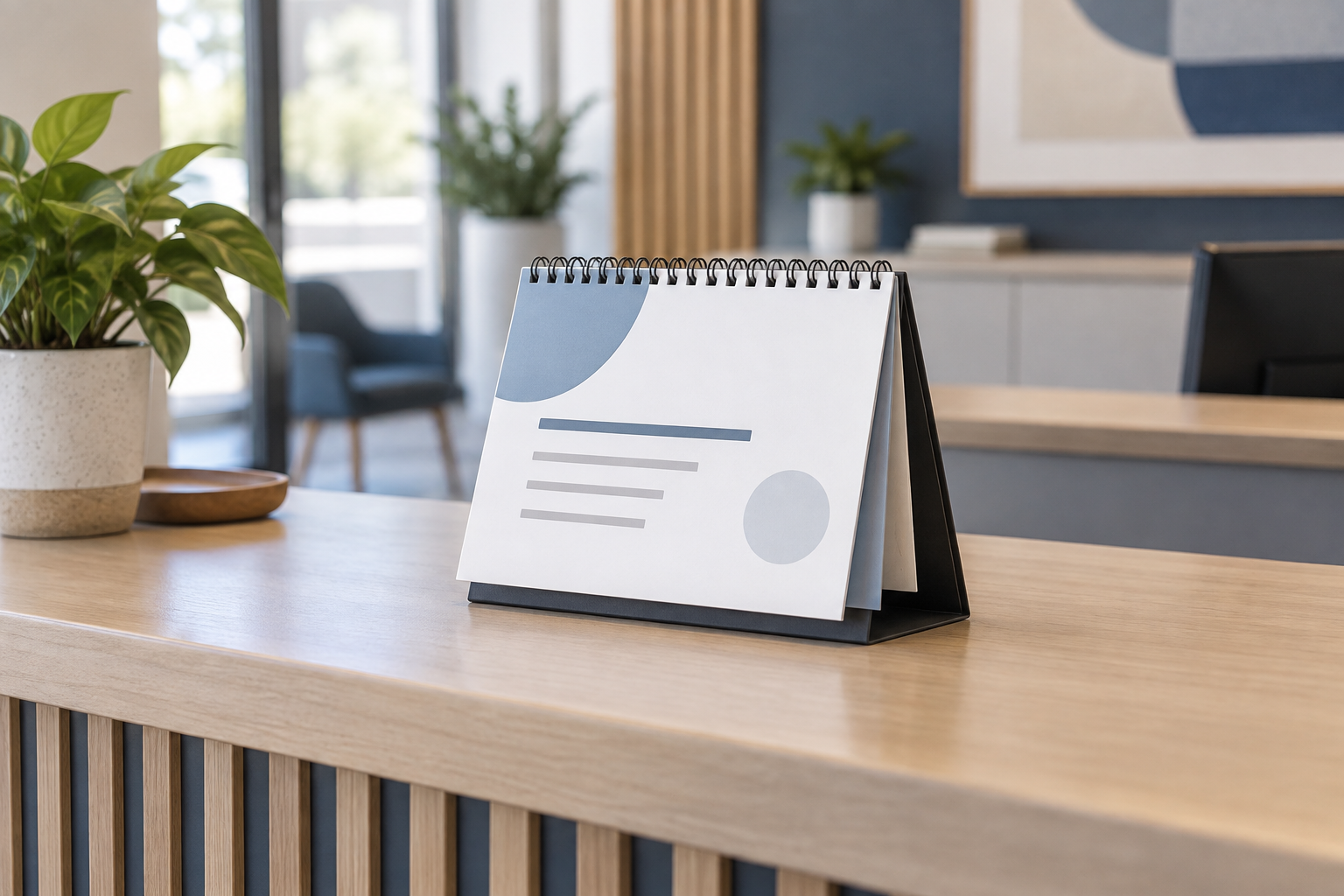
Compare flip-chart displays after mapping the pages
Check the listed page dimensions, usable display area, page count, binding and turning method, full base footprint, orientation, page-replacement method, product weight, and current maker guidance. Confirm what is included instead of assuming the pictured inserts can be changed.
Quick verdict: buy, skip, delay, or simplify
- Buy: the same compact set of messages returns daily, the order is meaningful, and staff will select the correct page at a defined time or task.
- Skip: one instruction must always be visible, readers arrive only briefly, pages would mostly be filler, or nobody owns the page-setting routine.
- Delay: the message set, sequence, insert dimensions, counter position, or update owner is still changing.
- Simplify: use one fixed insert, a dry-erase board for fluid information, or separate signs placed where each decision happens.
The repeatable-set test
Write every proposed page on an index card. Beside each one, note when it appears, who turns to it, and what action the reader should take. A strong set might rotate between a morning instruction, a midday service note, and an end-of-day message. A weak set mixes permanent directions, occasional promotions, staff reminders, and long explanations simply because pages are available.
- Remove any page that does not have a recurring trigger.
- Separate staff-only information from customer-facing messages.
- Put urgent or always-needed information on a separate fixed sign.
- Arrange the remaining cards in the order staff will actually use.
- Run the sequence for several representative operating days before buying.
If people repeatedly search for a page, leave the wrong page showing, or add loose notes beside the mockup, the format is not solving the workflow.
When a bound flip chart earns its counter space
The format works best when page order matters and the display has a clear operator. A reception desk might select one of a few arrival instructions. A service counter might rotate a concise process message by time of day. A staffed event table might step through a short, repeatable explanation. In each case, the selected page has one job and the other pages stay attached and ready.
Measure the complete product, not only the printed page. The folded base may extend behind the display, and a page needs clearance to travel over the binding. Tape the listed footprint on the counter and add enough open space for turning without colliding with a monitor, wall, brochure holder, merchandise, or payment equipment.
Tradeoffs people miss
- Only one page is visible: hidden pages cannot carry information that every visitor must see.
- Sequence can drift: a hurried page turn may skip a message or expose the back of another page. Test the actual turning pattern.
- Page replacement varies: some products may use permanently bound pages while others accept replaceable inserts. Verify the current listing and maker instructions.
- Usable area is smaller than page size: binding, margins, pockets, or edge coverage can reduce the visible design area.
- Type still needs distance: a landscape page can tempt the designer to fit a paragraph where a short headline and next action would work better.
- Reflections and angle matter: protective faces may catch windows or ceiling lights. Test a paper-and-clear-sleeve mockup at the intended sightline.
- Ownership is operational: one person or role should control page content, selection, review dates, and retirement of stale pages.
Choose another format when
Use one fixed sign when the same direction should remain obvious all day. Choose a printed-insert system when one message changes on a weekly or scheduled cycle and old versions can be removed. Choose a dry-erase schedule sign when the structure remains stable but details are written and revised frequently. A single- or double-sided counter holder is often clearer when viewing direction—not message sequence—is the real problem.
Do not make visitors browse a flip chart to discover check-in, accessibility, emergency, payment, or other essential instructions. Determine the appropriate visible placement and requirements with the responsible property or operational stakeholders.
Red flags before ordering
- The listing does not clearly state page size, visible area, page count, total dimensions, or whether pages are replaceable.
- The proposed content has no stable sequence or trigger.
- The counter cannot provide page-turning clearance.
- The plan depends on visitors knowing they should browse the pages.
- The message needs dense copy or small type to fit.
- No one is responsible for selecting the page and removing stale content.
A low-cost trial before you buy
- Choose a current candidate and record its listed overall dimensions and page area.
- Fold cardboard into a stand with the same complete footprint.
- Bind or clip full-size paper drafts at the top so they turn in the intended direction.
- Place the mockup in the working counter setup and follow the proposed page schedule.
- Note missed turns, hidden essentials, glare, collisions, and any page nobody uses.
- Then compare products by documented fit, turning method, page capacity, update method, care guidance, and return terms.
Bottom line
A tabletop flip-chart sign is worth buying when it organizes a small, recurring message set and a clear owner can keep the correct page visible. It is a poor solution for one urgent instruction or an unpredictable stream of updates. Prove the sequence with paper, reserve permanent visibility for essential information, and measure both the base and page-turning path before ordering.
Next, compare a rotating holder with a tabletop flip chart, choose replacement binder rings by measured compatibility if an existing compatible display only needs new hardware, decide whether a printed-insert system better matches scheduled updates, or use the reception desk sign-holder guide for a simpler fixed display.