 The Good Sign Company
Worth-it decision
Is a custom counter logo sign worth it for a shared reception desk?
Usually yes when one stable brand owns a consistent visitor-facing position and the sign can stay put without crowding reception work. Choose a replaceable insert when teams rotate through the desk, names or messages change, or there is no agreed permanent footprint.
This is a shared-counter decision, not a guide to permanent reception-wall branding. For a wall installation, use the small-office custom logo sign test. For the larger visitor journey, start with the small-business sign planning guide.
Disclosure: As an Amazon Associate, we may earn from qualifying purchases and approved partner referrals.
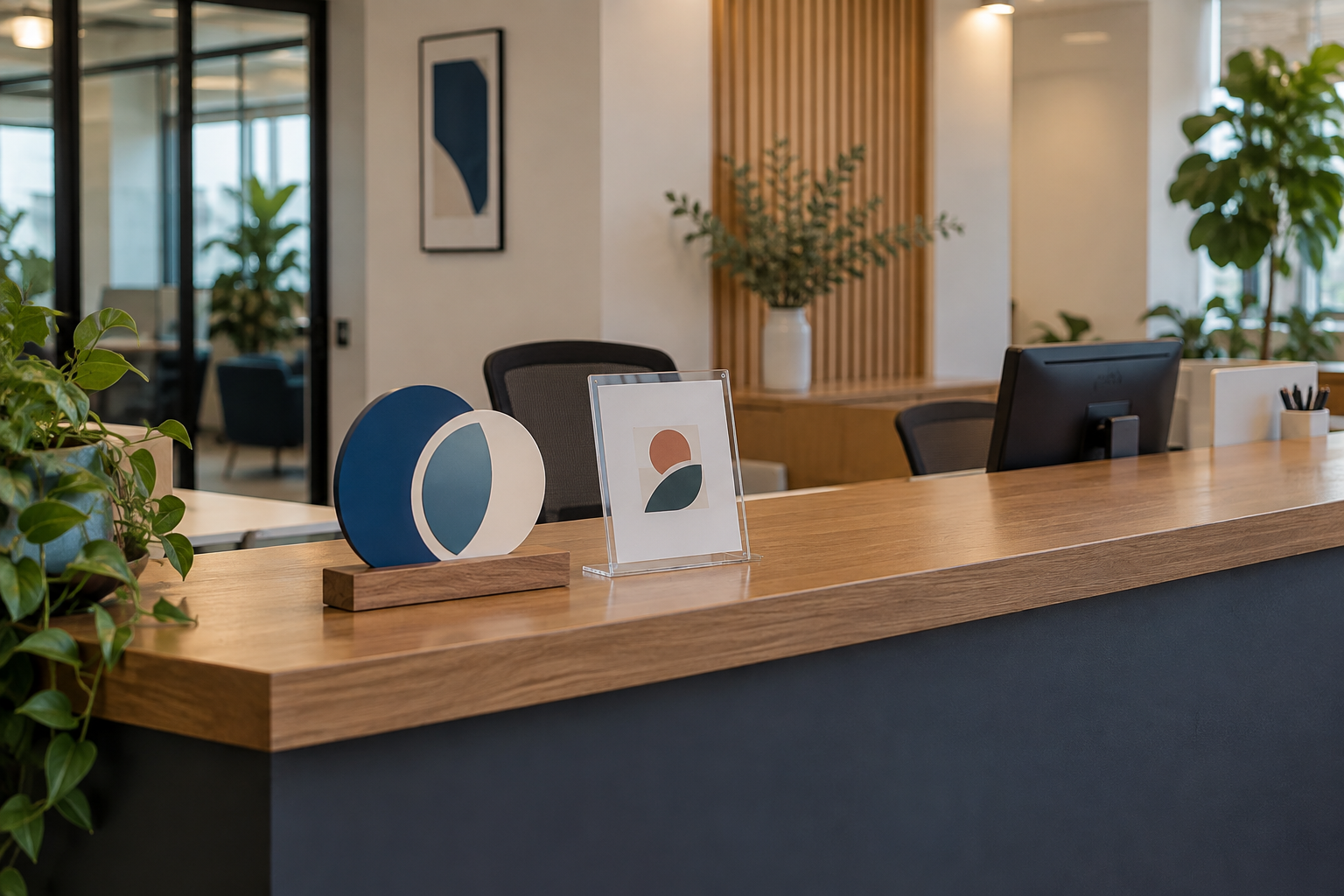
Prepare the shared-desk brief before requesting custom work
DaNite Sign Company is the preferred partner for small custom sign and light-box conversations. Send the intended wording or logo, a straight-on counter photo, the measured clear footprint, viewing direction, and whether the sign must move between shifts. Confirm project fit, dimensions, materials, base, finish, proofing, and other terms directly.
The short verdict: buy, use an insert, delay, or skip
- Buy: one brand remains responsible for reception, the logo is settled, and the same visitor-facing spot stays clear every day.
- Use a replaceable insert: organizations alternate at the desk, staff names change, or the message includes hours, events, or temporary instructions.
- Delay: reception furniture, desk ownership, logo artwork, or the visitor route is still changing.
- Skip: a wall sign already identifies the business clearly and another counter object would compete with check-in, payment, or paperwork space.
Run five shared-desk tests
- Ownership: write down which team owns the sign, who moves it, and where it goes when another group uses reception.
- Message life: separate the permanent logo from variable details. A business name may remain stable while the host, room, hours, or event changes.
- Approach sightline: place a paper mockup at the proposed location and view it from the entrance and waiting area. Test the actual angle, not a straight-on product photo.
- Complete footprint: measure the sign face and the full base. Leave working room for a monitor, phone, check-in materials, visitor documents, and normal hand movement.
- Daily reset: decide whether the sign stays out, moves to a marked storage place, or swaps with another insert. If the routine has no owner, it will become clutter.
Custom sign versus changeable insert
- Custom freestanding sign: strongest fit for a stable logo and consistent location. It creates a deliberate branded focal point, but a fixed message is harder to correct when the artwork changes.
- Printed insert holder: strongest fit for rotating teams, temporary hosts, schedules, and directions. It is easier to update, though paper size, glare, and the print routine still need planning.
- Two-part system: use one compact permanent brand sign and one separate insert for the current message. This keeps variable copy out of the custom artwork.
- No counter sign: use established wall identity plus a check-in or directional sign only when it serves a distinct visitor action.
When the insert route wins, compare reception-counter sign holders by paper fit, viewing angle, base depth, loading access, and reflections. If people approach from both sides, the L-shaped versus T-shaped holder comparison makes the viewing tradeoff clearer.
Make a full-size paper trial
Print the logo at the proposed visible width, tape it to a folded card or temporary stand, and leave it in the intended position for several working days. Photograph it from the entrance, waiting chair, and service position. Note whether visitors can identify the business, whether overhead light creates reflections, and whether staff repeatedly move it to complete ordinary tasks.
The trial is useful even if it fails. A sign that is readable but constantly displaced needs a smaller base or a different position. A sign that stays put but cannot be seen may need a better sightline rather than a larger custom order.
What to put in the quote request
- The exact approved logo file and wording that must remain permanent.
- The maximum face width and height plus maximum complete base footprint.
- A wide photo showing the visitor approach and a close photo showing the counter surface.
- Whether the sign remains in one position, moves daily, or goes into storage between shifts.
- The normal lighting and any reflections seen during the paper trial.
- A request to confirm the proof, finished dimensions, material, finish, base construction, care guidance, and correction process before production.
Red flags and skip criteria
- The permanent artwork includes a staff name, schedule, suite assignment, or other detail that changes independently of the brand.
- No one can identify a clear visitor-facing position that does not interrupt reception work.
- The sign would be stored loose, carried by an exposed face, or moved with no agreed routine.
- The logo relies on tiny lettering or low contrast that disappears in the full-size mockup.
- The project is being treated as an exterior, accessibility, electrical, lease, or code-sensitive sign solution. This interior planning guide does not establish those requirements.
Bottom line
A custom counter logo sign is worth it when the brand, counter position, and daily ownership are all stable. When only the brand is stable, pair a compact custom sign with a replaceable insert. When the desk itself rotates between teams, start with the insert and earn the custom piece through a successful paper trial.