 The Good Sign Company
Light-box placement comparison
Wall-mounted light box vs tabletop light box: which placement fits?
Choose a wall-mounted light box when the message needs a steady, elevated sightline and the wall, attachment plan, and cord route are settled. Choose a tabletop light box when moving the display, avoiding wall work, or keeping the message close matters more than preserving desk or counter space. Compare the complete outside dimensions and setup—not just the glowing face.
Disclosure: As an Amazon Associate, we may earn from qualifying purchases and approved partner referrals.
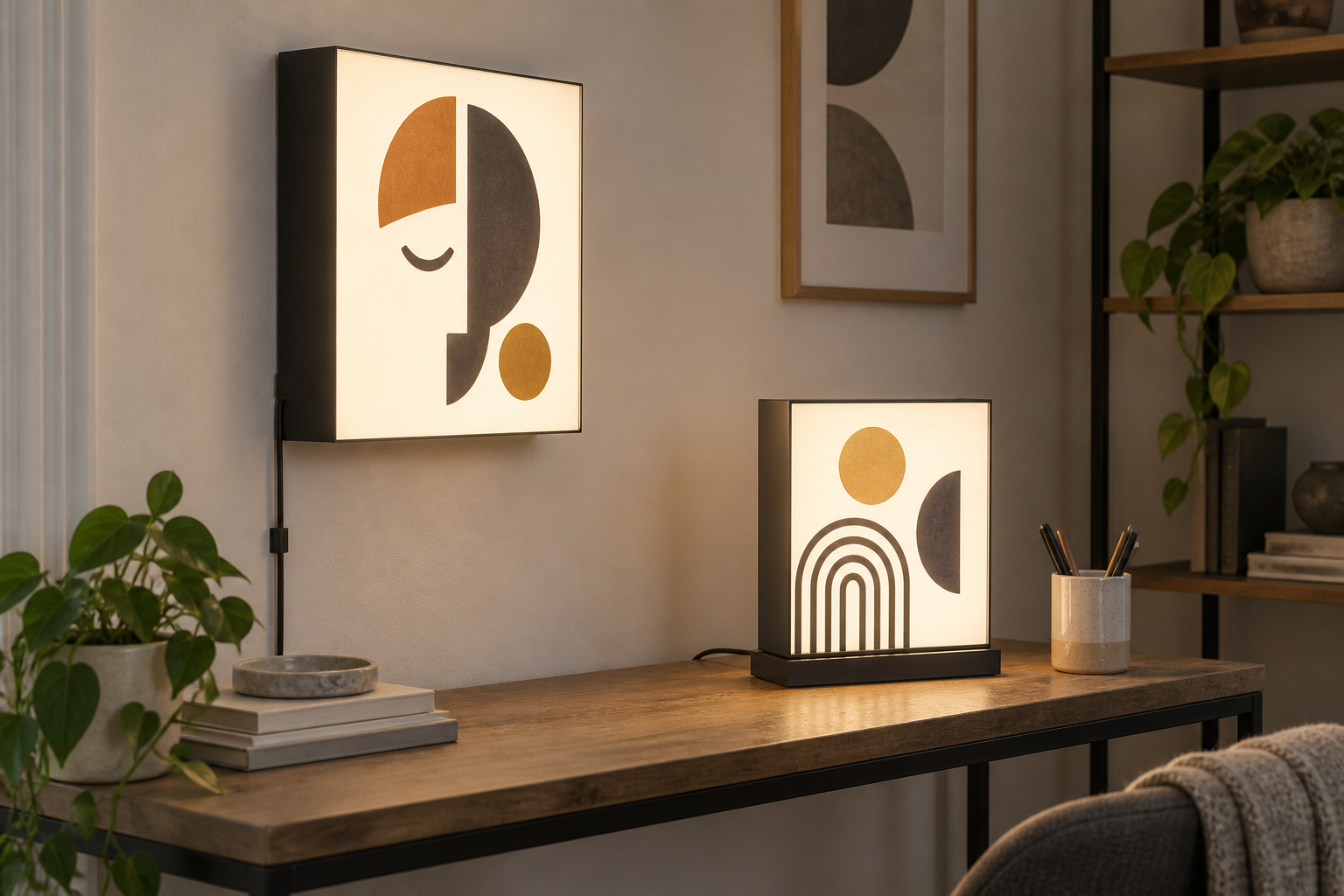
Compare the actual formats
Use the category routes to inspect current outside dimensions, base or mounting details, power components, controls, message access, and stated indoor-use instructions. For a personalized face, bring a measured placement brief to the custom-sign conversation.
Quick decision
- Lean wall-mounted when the display should read over furniture, remain aligned with a room or camera view, and leave the desk or counter clear.
- Lean tabletop when the sign may move between a desk, shelf, counter, or event setup and there is a measured, stable surface for its complete base.
- Choose an unlit sign when a cord would be distracting, an outlet is poorly placed, or glow does not improve the message.
- Pause when the mounting method, complete depth, base footprint, power input, or message-change method is missing from the listing or project brief.
The placement tradeoffs
| Decision | Wall-mounted light box | Tabletop light box |
|---|---|---|
| Sightline | Can sit above furniture and visual clutter, but height and angle become fixed. | Works at close range on a desk, shelf, or counter, but foreground objects may block it. |
| Space used | Uses clear wall area plus the box depth and cable path. | Uses the full base footprint plus clearance for controls, cable, and message access. |
| Setup commitment | Requires a mounting approach matched to the complete sign and known wall. | Avoids wall attachment but still needs a level, stable surface and compatible base. |
| Relocation | Better treated as a settled display unless the product is specifically designed for frequent removal. | Easier to reposition when its size, weight, power parts, and cable can move together. |
| Message access | Loading a changeable face may be awkward when mounted high or beside furniture. | Usually easier to reach, but the loading edge still needs clear space. |
Measure the whole object, not the illuminated area
Record the maximum width, height, and depth, including a wall bracket, projecting fastener, tabletop base, feet, switches, and cable exit. A face that fits between shelves may still fail once the enclosure depth meets a cabinet door or the base consumes the writing area of a desk.
Make a full-size paper outline for the wall and a cardboard footprint for the tabletop. View each from the doorway, normal seat, customer approach, or camera position. This separates the general placement choice from the separate question in our plug-in light box versus USB desk sign guide, which centers on power format.
Plan mounting or base fit
For the wall format, identify the wall construction and compare it with the product's mounting instructions and complete weight. Do not choose hardware by appearance alone. Note the required access around keyholes, brackets, screws, removable faces, or service panels, and get qualified help when the installation exceeds your experience.
For a tabletop format, measure the entire base and the usable surface around it. Check whether routine cleaning, drawers, screens, merchandise, elbows, or papers will conflict with the sign. A freestanding label does not guarantee that a tall sign suits a narrow or bump-prone counter.
Map the power route before choosing the format
- Outlet: locate it relative to the final sign position instead of estimating from a product photo.
- Cable exit: confirm where the cable leaves the enclosure and whether the listed length reaches without tension.
- Power parts: include any adapter, controller, switch, or inline control in the space plan.
- Walking and work areas: do not route a cable where it creates a snag or trip concern; choose another position or seek suitable installation help.
- Controls: place switches and brightness controls where they can be reached without moving or pulling on the sign.
Match the message and update routine
A fixed printed or custom face suits a stable name, short phrase, or graphic. A changeable face needs enough clearance to remove panels, letters, or inserts at the final height. If the message changes often, test the complete update sequence before buying; a tabletop format may be easier to reach, while a wall display may keep the message visible between updates.
Seller language is inconsistent, so check construction in the current photos and specifications. Some “tabletop” products rely on a separate stand, and some wall-capable boxes may not include the hardware for every surface. Confirm what is included rather than inferring it from the category name.
Who should skip each format?
- Skip wall mounting when the wall, approved attachment points, sign weight, or installation instructions are unknown.
- Skip tabletop placement when the surface is crowded, sloped, frequently bumped, or too small for the complete base and cable clearance.
- Skip a high wall position when the message face or controls need frequent hands-on access.
- Skip either powered format when there is no practical outlet and cord route for the intended position.
- Skip custom production while the message, outside dimensions, display location, or orientation is still changing; prototype the placement first.
Useful next steps
Use the broader custom light-box planning guide when the message, face design, and buying route are still open. If lighting is optional, compare a general wall-mounted sign with a tabletop sign. Then verify the exact candidate's instructions and included parts before ordering.
The bottom line
A wall-mounted light box buys a stable elevated position and preserves the work surface, but it demands confidence in the wall, height, depth, access, and cord plan. A tabletop light box buys easier relocation and close access, but it consumes surface area and depends on a suitable base. Mock up both full outside dimensions in the real room before letting the illuminated face decide for you.