 The Good Sign Company
Storage-bin labeling decision
Is a Label Maker Worth It for Storage-Bin Signs?
A label maker is usually worth it when the same person or team changes many short bin labels repeatedly and can maintain one compatible tape system. Skip it when labels are rare, wording is long, the holder is not measured, or a printable insert already fits the workflow.
Do not start with the machine. Start with the bins, the holder's visible opening, the normal reading distance, and the number of real changes expected each month. That separates a useful production tool from another device and supply family to store.
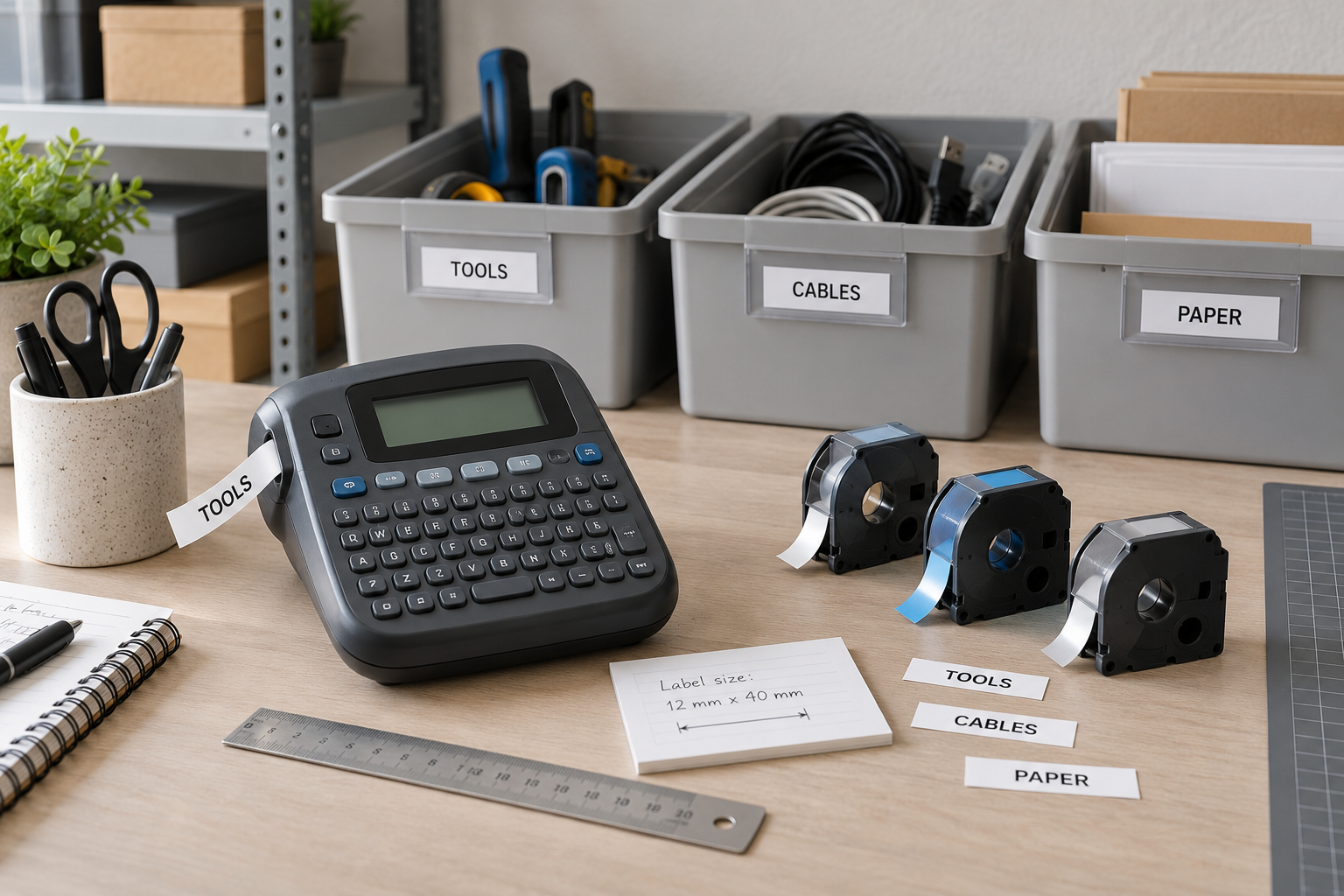
Compare only after measuring one real holder
Check current manufacturer documentation and listings for supported tape families and widths, printed margins, controls, power method, included supplies, and complete device dimensions. A category listing does not prove fit.
Quick verdict: buy, delay, skip, or choose another route
| Decision | When it fits | Next step |
|---|---|---|
| Buy | You make frequent short labels, one supported tape width fits the measured holder, and a named operator will keep the device and supplies organized. | Print and install the longest real label before choosing a model. |
| Delay | The holder, naming convention, update volume, or person responsible is still unsettled. | Run a month with paper mockups and record actual changes. |
| Skip | You need only a few stable labels or the device would duplicate equipment already available. | Use printed cards, handwriting where appropriate, or a print service. |
| Choose an alternative | Messages need larger type, multiple lines, color, icons, or layouts that compatible tape cannot reproduce clearly. | Use printable inserts and a larger compatible holder. |
| Escalate | The labels support barcodes, safety, chemical, temperature, accessibility, or another controlled identification system. | Follow the relevant operational requirements and qualified product guidance. |
Five tests that make the decision
1. Count real updates, not possible uses
Review the last several weeks. Count new labels, renamed categories, damaged labels, and moves between bins. A steady batch of changes supports equipment ownership; a handful of stable names usually does not. Include the time to enter, print, trim or peel, install, and record each label.
2. Measure the complete label path
Measure the holder's loading opening and visible window, not just its marketed size. Confirm where the tape will sit: on a removable card, inside a sleeve, or on another manufacturer-approved surface. Test the longest useful bin name at actual size and view it from the normal aisle or work position.
3. Check the supply commitment
A label maker commits the owner to a documented cartridge family. Confirm compatible widths, current replacement access, text and background options, and who will reorder supplies. Similar-looking cartridges are not evidence of compatibility. Avoid residue, adhesion, moisture, chemical, or temperature claims unless the exact tape maker documents the use.
4. Price the whole setup burden
The tradeoff is broader than purchase price. Allow space for the device, power supply or supported batteries, spare cartridges, backing cards, instructions, and offcuts. Software- or phone-connected models also need a maintained device, current app or software support, saved templates, and a handoff plan.
5. Name the maintenance owner
Decide who approves names, keeps the layout consistent, stocks tape, and removes obsolete labels. If nobody owns those tasks, a faster printer will not fix the system. A shared naming sheet and one sample label can matter more than extra device features.
Red flags before buying
- The label holder has not been measured.
- The longest real message fits only with cramped type or unclear abbreviations.
- The proposed machine's supported tape family is unknown.
- The team wants color, icons, long instructions, or several lines from a narrow tape format.
- No one owns templates, replacement supplies, or future updates.
- The purchase is justified by vague organization goals rather than a recorded labeling workload.
- The labels carry controlled operational information that this general decor and display guide cannot validate.
Who should skip a label maker?
Skip the purchase if there are only a few stable bins, if a printer and paper cutter already produce good inserts, or if the holder needs more type area than compatible tape supplies. It is also reasonable to skip when staff turnover makes an app, account, template, or proprietary supply system hard to maintain.
If the main uncertainty is the message format, compare label-maker tape with printable paper inserts. If tape is already the chosen route, use the label-maker selection guide rather than repeating the ownership decision.
A low-cost test before committing
- List the ten longest current bin names.
- Measure one holder's opening and visible area.
- Create actual-size paper samples using the likely tape width.
- Install them and read them from the normal working position.
- Track additions and changes for one month.
- Buy only if the observed volume, fit, and named owner support a repeatable routine.
The bottom line
Buy when repeated short-label work, measured holder fit, readable samples, replacement supplies, and clear ownership all line up. Delay while the holder or naming system is changing. Skip when the volume is low or printed inserts handle longer messages better. For the broader workflow, continue with the small-business sign planning pillar.