Small Event Display Guide
Best table number holders for small events.
The best holder is the one that keeps every number visible without taking over a crowded table. Match the card first, then compare height, base footprint, stability, quantity, finish, and how the full set will travel.
Disclosure: As an Amazon Associate, we may earn from qualifying purchases and approved partner referrals.
Category route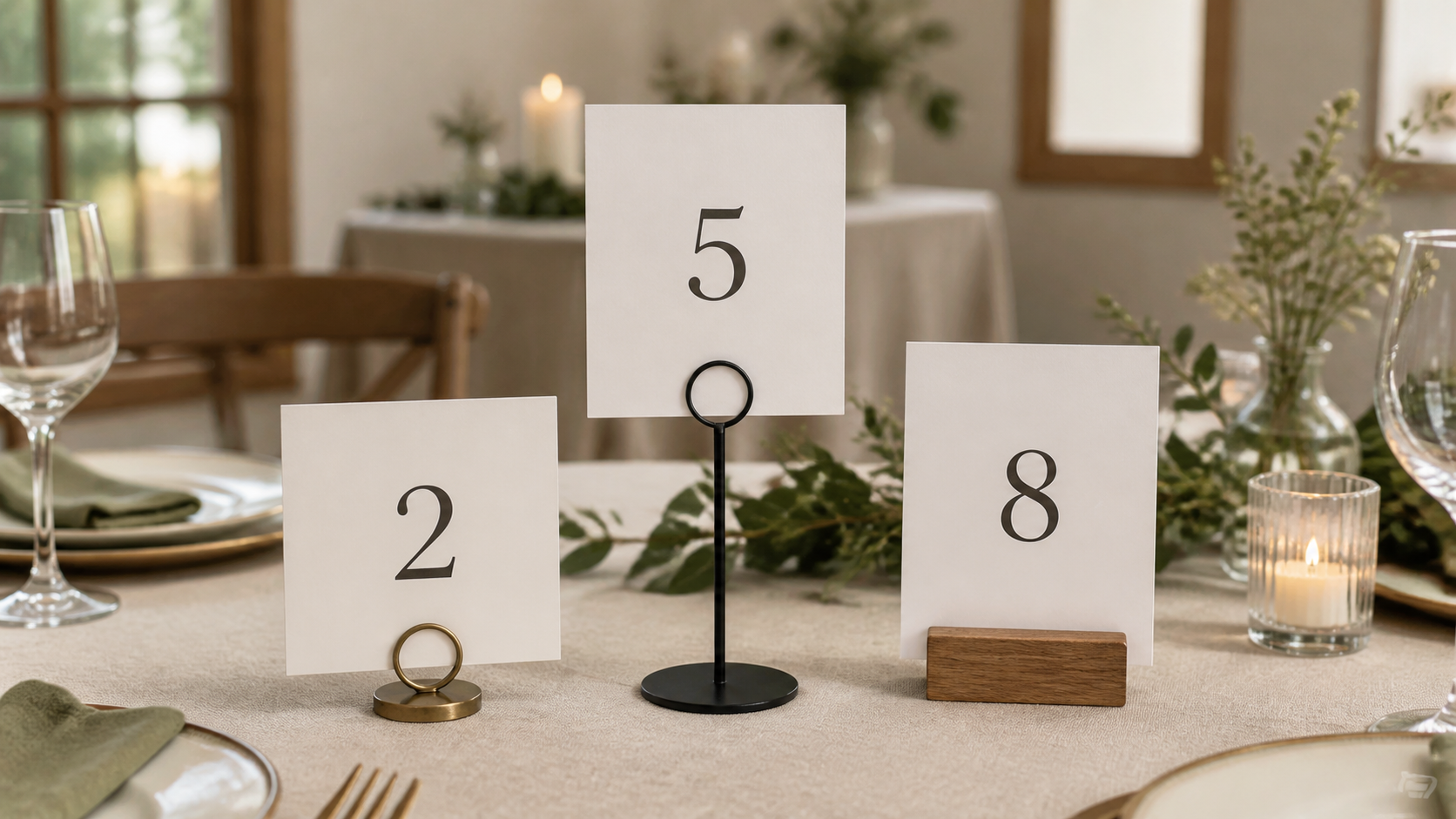
Best starting route
Compare complete sets only after fixing the card size.
A holder advertised for photos, place cards, or table numbers may grip a different thickness or use a much smaller base than the image suggests. Make one finished sample card, measure it, and compare the listed opening, holder height, base dimensions, quantity, and packing method.
Related: use the reserved-table sign guide for seating restrictions, or the tabletop sign stand guide for larger cards and counter displays.
How we compare table number holders
This is a product-category comparison and buying framework, not hands-on testing or a ranking of current named products. Compare candidates in this order:
- Card compatibility: confirm finished width, height, thickness, orientation, and whether the slot or clip can hold that material without bending it.
- Sightline: place a full-size mockup behind the planned centerpiece, glassware, and shared dishes; check it from the normal guest approach.
- Base footprint: measure the entire base on the table plan, especially when place settings, favors, menus, and flowers compete for space.
- Stability: compare the maker's stated base dimensions, weight, assembly, and intended use. A taller holder creates more leverage when the card is bumped.
- Set quantity: count guest tables plus the head, gift, welcome, buffet, and spare positions that may use the same format.
- Packing and reuse: check whether stems detach, finishes can rub together, clips can snag linens, and the set fits the event-day container.
Best format by table setup
Build one complete table before ordering the set
Print one number at finished size and put it in a borrowed holder or a simple mockup at the intended height. Add the centerpiece, plates, glassware, menus, favors, and shared serving pieces. Then approach from the room entrance and from both sides of the table.
The number should be easy to find without blocking conversation. If guests must lean or circle the table, first simplify the centerpiece or raise the number slightly. Do not assume the tallest option is best: a large card on a tall stem can dominate a small table and needs a base designed for that leverage.
Plan quantity, sorting, and event-day setup
- Count every numbered guest table, then list any matching holders needed for buffet labels, a gift table, or other distinct jobs.
- Add a small practical spare quantity only after confirming the seller's current pack count; do not rely on the search-result thumbnail.
- Sort holders and cards in table order before transport, with finishes separated if rubbing could mark them.
- Keep cards flat and dry, and pack clips so they cannot crease paper or snag fabric.
- Give the setup team a simple table map and a photo of the finished sample.
Who should skip these holders?
- Skip a low holder when flowers, bottles, or shared dishes hide the number from the guest approach.
- Skip a tall wire holder when the base consumes needed place-setting space or the card makes it feel top-heavy.
- Skip a narrow slot when the finished card includes thick board, a folded tent, or layered material the seller does not list as compatible.
- Skip a finish chosen only from styled photos; compare the actual listed color, dimensions, quantity, and return terms.
- Skip separate holders when a venue already supplies coordinated table numbers that fit its layout and setup routine.
- Skip this category for outdoor or high-traffic conditions unless the product and venue plan specifically address those conditions.
 The Good Sign Company