 The Good Sign Company
Interior Glass Sign Comparison
Suction cups vs static cling: which fits an interior glass sign?
Suction cups hold a separate card, pocket, or rigid sign against glass. Static cling is a flexible graphic that contacts the glass directly. That construction difference affects edge visibility, message changes, storage, cleaning, and how precisely the display must fit the pane.
Disclosure: As an Amazon Associate, we may earn from qualifying purchases and approved partner referrals.
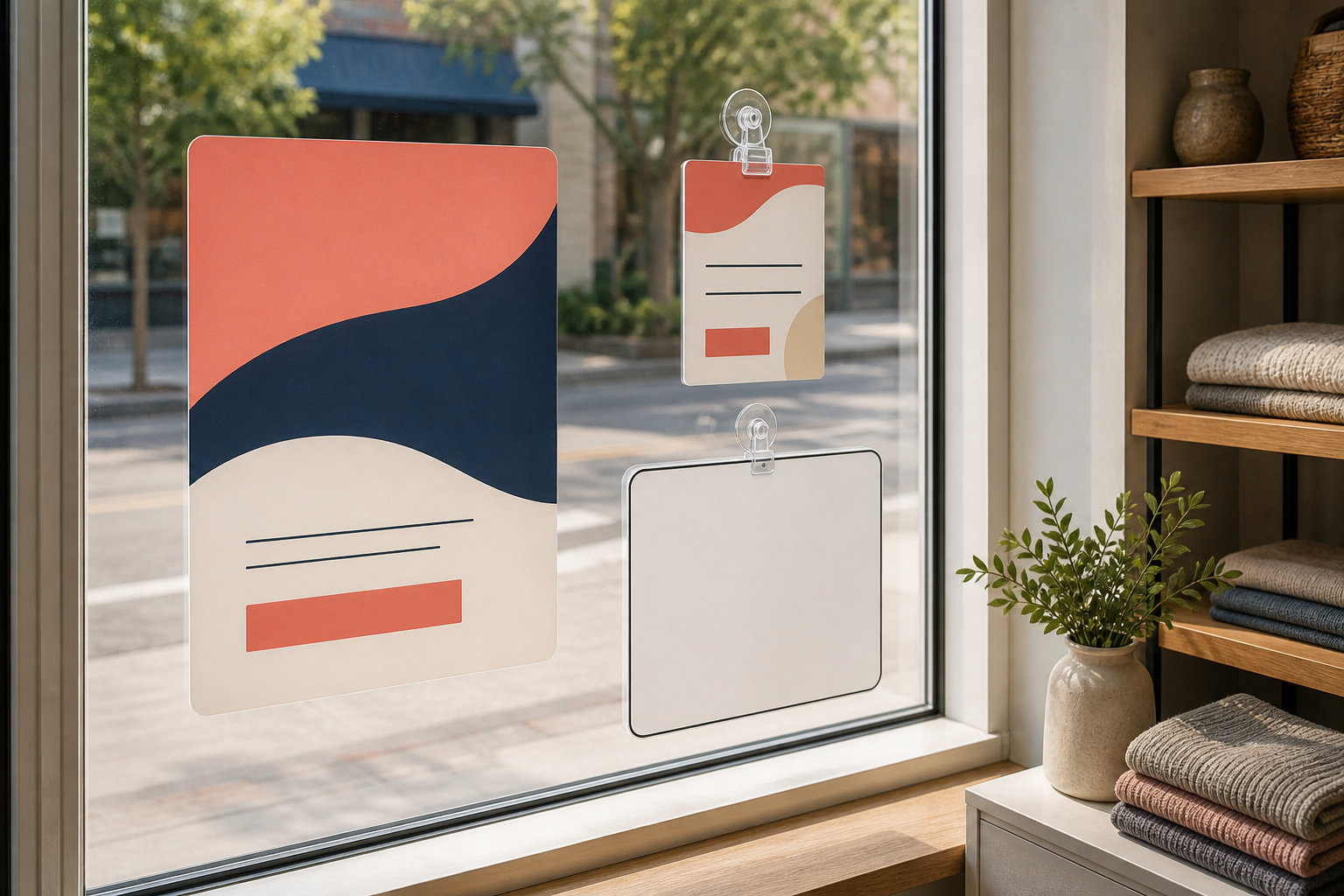
Compare both interior-glass routes
Start with the message format, not the attachment alone.
A suction cup needs a compatible holder or sign attachment. Static cling needs a smooth, clean pane and a graphic made for that application. Check the complete product instructions, finished dimensions, orientation, and intended surface before buying.
The short answer
- Choose suction cups when you want to display a separate printed card, acrylic pocket, or lightweight rigid sign and change that insert independently.
- Choose static cling when a low-profile flexible graphic should sit directly on smooth interior glass without visible holder hardware.
- Skip both when the product instructions exclude the pane or environment, the message must be seen reliably from several approach angles, or a falling or peeling display would create an unacceptable obstruction.
What changes between the two formats?
The holder and the message
With suction cups, the attachment and message are separate parts. That can make paper updates simple when the holder uses a pocket or clip, but every connection—from cup to hook or clip to sign—must match. A static-cling graphic combines message and attachment in one flexible sheet, so changing the message usually means changing the cling itself.
Profile, edges, and the view through glass
Suction cups, hooks, clips, and pockets remain visible and project from the pane. Static cling has a flatter profile, but bubbles, wrinkles, lifted corners, and the unprinted outline can become visible. Check whether the artwork is meant to be read from the application side or through the glass; printing and adhesive-free contact orientation are product-specific.
Repositioning and reuse
A suction-cup assembly can often be moved as a unit after it is released correctly, while an insert may be replaced without moving the cups. A cling may be repositionable or reusable only if its maker says so and its surface remains suitable. Do not treat either label as a promise of unlimited reuse or mark-free removal.
Message size and weight
Static cling spreads contact across the graphic, while suction cups concentrate support at selected points. For a cup-mounted display, verify the complete sign weight, cup count, holder design, attachment points, and product limits. For cling, verify sheet dimensions, compatible glass, application directions, and whether seams or multiple panels are intended.
Setup checks before buying
- Confirm that the pane is ordinary smooth glass or another surface specifically listed by the product maker; coatings, films, texture, seams, and residue may change suitability.
- Measure the clear glass area and mark the finished display size from both sides of the pane.
- Decide which side must read the message and verify the product's print orientation.
- For suction cups, match the holder to the sign thickness, dimensions, weight, and attachment points.
- For static cling, check the application method, edge clearance, smoothing tool guidance, and any instructions for removing trapped air.
- Keep the display clear of handles, locks, door sweeps, sensors, and required sightlines. For a business location, confirm the placement with the appropriate site or property contact rather than assuming permission.
Cleaning and maintenance
Prepare the glass only as the sign or holder maker directs. Residue, dust, and lint can interfere with contact, but a cleaner that suits bare glass may not suit nearby film, printed graphics, acrylic pockets, or finished hardware. Apply and remove products with the pane supported as appropriate; do not use this page as glazing or door-service guidance.
Inspect suction cups for deformation, cracks, loss of contact, and loosening at the clip or hook. Inspect cling edges for lifting, trapped debris, wrinkles, or movement. Remove a display that no longer sits as intended, then follow its documented cleaning or reapplication process instead of adding an unapproved adhesive.
Who should skip each option?
- Skip suction cups when visible hardware conflicts with the design, the sign or holder falls outside stated limits, or the pane cannot accommodate the cups without crowding door hardware.
- Skip static cling when frequent paper-message swaps matter more than a flush appearance, the glass is textured or otherwise excluded, or lifted edges would undermine the presentation.
- Skip both for exterior exposure unless a specific product is documented for that use. This comparison covers interior glass only.
- Choose a freestanding or tabletop display when the glass is unsuitable, placement approval is uncertain, or the sign needs to move between locations.
Choose the next step
If a separate paper card or lightweight rigid sign is the better format, continue to the suction-cup sign-holder guide to compare clips, hooks, pockets, glass preparation, and verified limits. For a promotion that changes with a campaign, the temporary window-sign guide covers message size, viewing direction, glare, installation, and removal planning.
If neither glass-contact route fits, compare wall-mounted and tabletop signs or use the sign mounting supplies guide to choose another indoor display method.
Verdict
Suction cups are the practical route when the message lives on a separate insert or rigid sign and visible holder hardware is acceptable. Static cling is the cleaner visual route when the graphic itself can be a flexible, pane-sized layer. Make the decision from the exact glass, viewing direction, message-change routine, finished format, and maker instructions—not from the promise that either category is universally removable or reusable.