 The Good Sign Company
Channel-letter mounting comparison
Raceway-mounted vs direct-mounted channel letters: compare what the façade has to carry
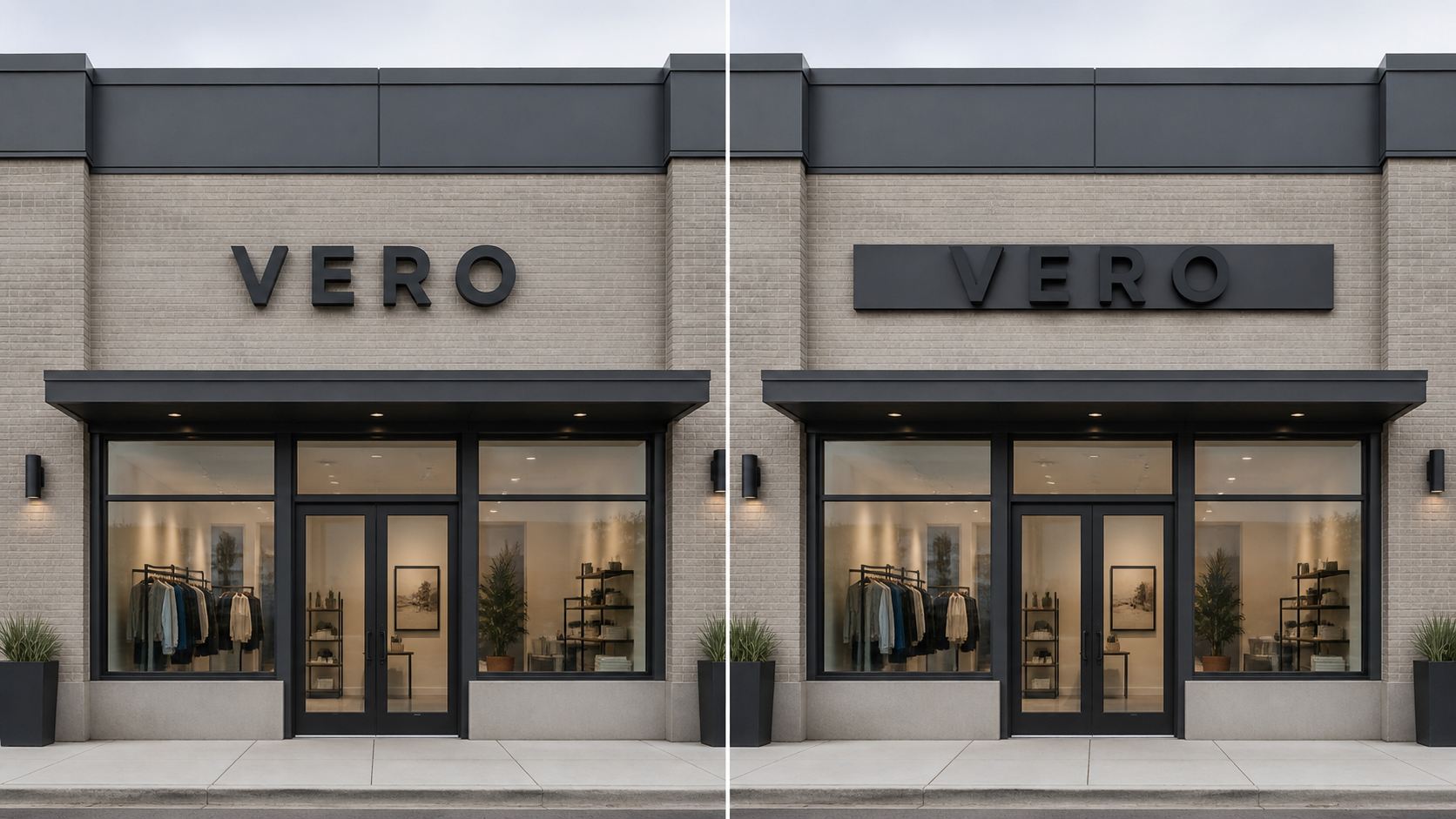
Direct-mounted channel letters can create a cleaner individual-letter appearance, while raceway-mounted letters place the letters and related components on a shared cabinet-like structure. The right choice starts with the building surface, visible backing, access, penetrations, and the mounting approach a qualified project team approves.
Disclosure: As an Amazon Associate, we may earn from qualifying purchases and approved partner referrals.
Quick decision
- Explore direct mounting when the individual-letter look is central to the façade and the wall, wiring plan, access, and approved attachment details support it.
- Explore a raceway when consolidating letters and related components on one visible structure fits the site better, or when the project team prefers that mounting approach.
- Ask about a backer panel too when the letters need a defined field for contrast or the façade design benefits from a larger shape behind the wordmark.
What the terms mean
DaNite Sign's current channel-letter information says letters are typically mounted directly to the wall, to a backer panel, or on a raceway, and that the best method depends on site conditions and landlord requirements. Its broader design page also lists flush mounting, standoffs, and raceway attachment among channel-letter options.
In practical visual terms, direct-mounted letters read as separate elements attached to the façade. A raceway is a shared structure behind the letters, so its height, length, depth, color, and placement become part of the elevation. A backer panel is another shared-background approach, but it may be designed as a larger visual field rather than a narrow support structure.
How direct mounting changes the façade
Direct mounting often puts more attention on the letter shapes because there is no continuous band behind the wordmark. That can suit a clean façade and a logo whose spacing matters. The tradeoff is that the mounting, wiring, penetrations, access, and wall condition need to be worked through for the actual building rather than inferred from a rendering.
- Visual advantage: the letters can feel integrated with the architecture.
- Planning question: ask what sits behind each letter and what will be visible from normal viewing angles.
- Wall question: provide clear façade photos and available construction information so qualified professionals can evaluate the site.
How a raceway changes the façade
A raceway creates a continuous shape behind the wordmark. Painting it to coordinate with the wall may reduce its visual prominence, but it does not make the structure disappear in every light or viewing angle. Treat it as an intentional part of the sign rather than approving the letters in isolation.
- Visual tradeoff: the shared band can make the installation look more self-contained, but it adds a horizontal shape behind the letters.
- Color tradeoff: a close wall-color match can help, while a contrasting raceway can act like a deliberate backer.
- Detail question: request the raceway dimensions, finish, projection, end views, and attachment points in the approval drawing.
Compare these criteria before approving either
- Normal approach: review the complete elevation from the sidewalk, parking area, or road position where recognition matters.
- Day and night appearance: examine the letters, wall, shadows, and visible structure in both conditions.
- Façade rhythm: check how a raceway or individually spaced letters interact with masonry joints, panels, windows, canopies, and neighboring signs.
- Wall penetrations: ask the project team to show the planned attachment and routing concept; do not assume one method always means fewer penetrations.
- Service access: ask how components are reached and what parts of the installation may need to be opened or removed.
- Removal later: ask what visible patching or surface work could remain if the tenant or sign changes.
- Project constraints: let the property owner, sign professional, electrician, and applicable authorities resolve site-specific requirements.
Questions to put on the drawing review
- Is this direct mount, raceway mount, standoff mount, or a backer-panel design?
- What backing, raceway, hardware, conduit, or other structure will be visible?
- What are the overall depth and projection from the wall?
- How does the proposed finish look against the actual façade in daylight?
- Where will attachment points and the power route be located?
- How will illuminated components be accessed for service?
- What should the property owner review before authorizing the selected approach?
Skip criteria
- Skip direct mounting when it has been chosen only for a cleaner rendering and the real wall, attachment, access, and routing details have not been reviewed.
- Skip a raceway when its size, color, depth, and end view are missing from the approval package.
- Skip either option when the complete sign is not shown on a straight-on façade image and from the normal customer approach.
- Pause when the property owner or project professionals have not addressed the site-specific installation path.
- Skip channel letters entirely when a non-illuminated panel, window graphic, projecting sign, or interior sign better answers the visibility problem.
Where to go next
Use the channel-letter planning guide to connect mounting with viewing distance, logo fit, and illumination. If the lighting direction is still undecided, compare backlit and front-lit signs. For the broader brief, return to the small-business sign planning pillar.
DaNite Sign currently presents custom channel letters and lists direct wall, backer-panel, and raceway mounting among the options it discusses. If your project is a commercial sign and that verified offering fits, ask DaNite Sign to explain the mounting approach proposed for your site.